Executive dysfunction can make writing feel strange from the outside. You may care deeply about the novel, know exactly what scene you want, and still feel unable to begin. That disconnect is real. Solving it usually means reducing startup load rather than trying to shame yourself into action.
These articles point back to a real writing workflow
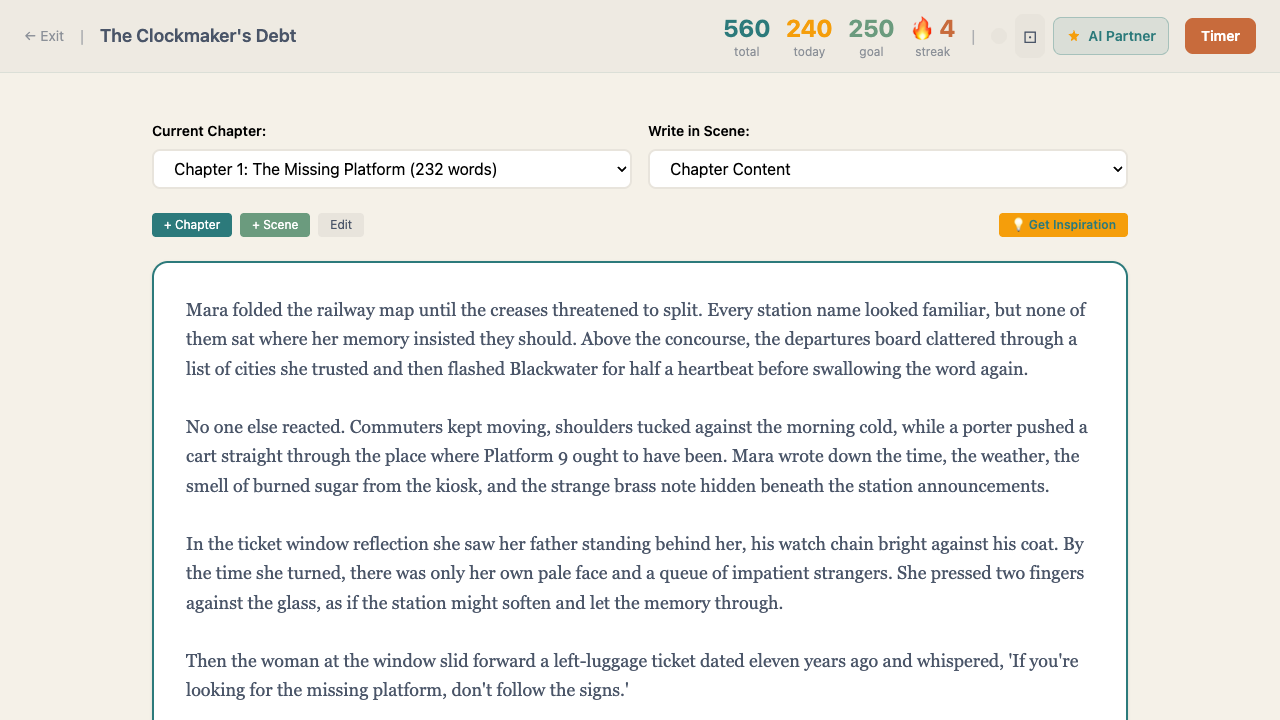
The goal is not just to explain ADHD-friendly writing strategies. It is to turn them into a practical drafting process with timers, scene structure, visible progress, and a calmer screen.
See the product demoRemove setup decisions
If starting a writing session requires choosing a chapter, deciding what to work on, finding your notes, and remembering where you left off, you have already spent a large amount of executive energy before writing a sentence.
Put those choices in front of yourself ahead of time. Keep the active chapter visible, store notes close to the draft, and define the next scene before the session starts.
Lower the threshold for success
When the only acceptable outcome is deep flow, your brain learns to avoid beginning. A better target is something modest and winnable.
Success can be 100 words, one paragraph of description, or a five-minute revision pass. Small wins reduce avoidance because they look possible.
Use visible progress cues
Progress cues matter because executive dysfunction often makes work feel invisible until a lot is done. Timers, streaks, session counts, and word totals give your brain proof that the effort is real.
That proof is especially useful on days when the session feels messy or slower than you wanted.
Replace guilt with re-entry
Guilt increases resistance. Re-entry reduces it. If you missed a few days, the right question is: what is the smallest believable way back into the manuscript today?
A forgiving restart path makes a bigger difference than an aggressive plan you cannot trust yourself to repeat.
Quick checklist
- • Decide the next writing target before you stop for the day.
- • Keep the first session small enough that you do not argue with it.
- • Use timers and visible counters to make progress feel concrete.
- • Measure success by re-entry, not perfection.
A writing app built around how ADHD attention actually works
ADHD Novelist is built for novelists who struggle to start, stay on task, and recover after missed days. The product combines focus mode, scene structure, visible momentum, and an AI writing partner so the strategies in these guides become easier to use in practice.
Related ADHD writing resources
Use these ideas inside the app
ADHD Novelist gives you a calmer writing screen, chapters and scenes, focus timers, flexible goals, and an AI writing partner so the advice above becomes a repeatable workflow.