Writing a novel with ADHD is usually less about finding perfect discipline and more about reducing friction. The goal is not to force yourself into a rigid author routine that collapses after two days. The goal is to make starting easier, to narrow the size of the next task, and to keep returning even when momentum breaks.
These articles point back to a real writing workflow
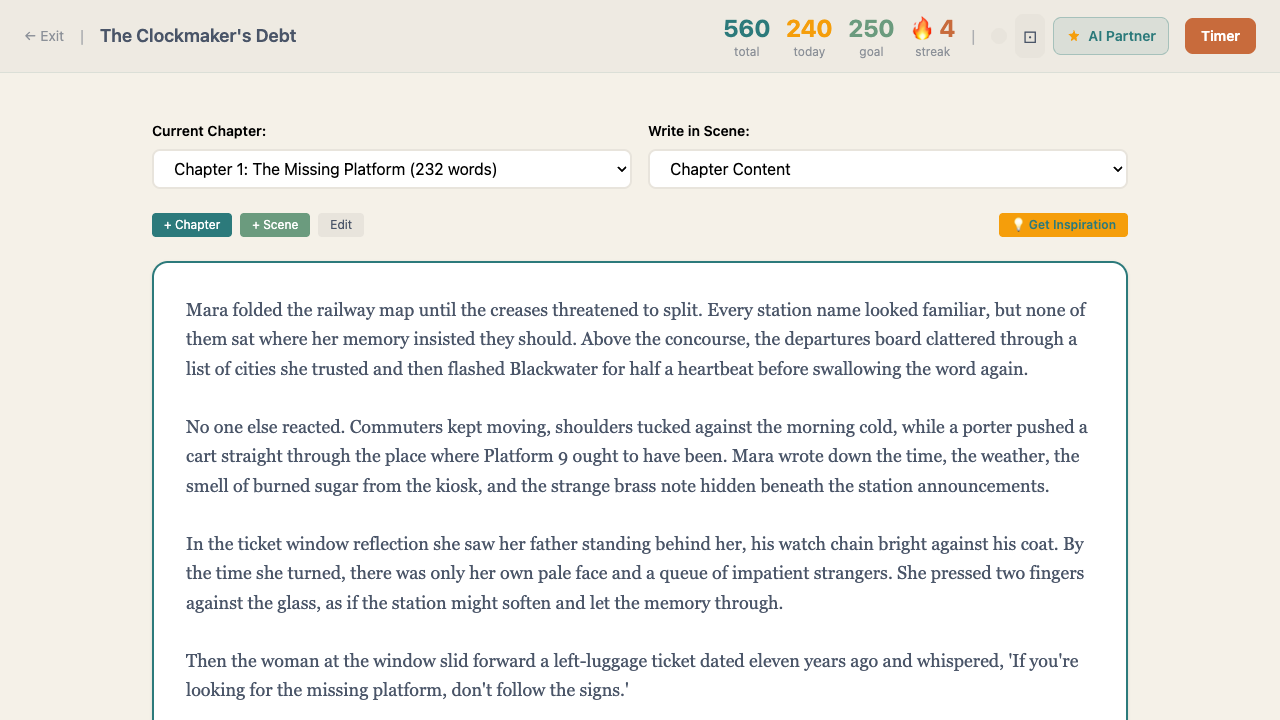
The goal is not just to explain ADHD-friendly writing strategies. It is to turn them into a practical drafting process with timers, scene structure, visible progress, and a calmer screen.
See the product demoMake the next step small enough to start
A full novel is too abstract to act on consistently. A chapter can still feel too big. A scene, a paragraph, or ten minutes is often the right level. If your brain is resisting, the problem is not always motivation. Often the task is still too large and undefined.
Instead of asking yourself to work on your novel, ask yourself to draft one exchange of dialogue, describe one room, or rewrite one opening paragraph. Smaller tasks lower activation energy.
Write in chunks, not in moods
Many ADHD writers wait for the right mental state. That can make the project feel unstable because writing only happens when energy, quiet, and confidence line up at the same time.
It is more reliable to write in bounded chunks: 10 minutes, 15 minutes, 250 words, one scene pass. Small containers turn writing into something you can start before you feel fully ready.
Use external structure
Structure is not cheating. It is support. Chapters, scenes, notes, timers, and progress cues reduce the number of decisions you have to make while already trying to focus.
The more clearly you can see what chapter you are in, what scene you are drafting, and what today's target is, the less mental energy gets lost on re-orienting yourself.
Expect restart days
One of the biggest traps for ADHD writers is treating interruption like failure. Missed days happen. The useful question is not whether you stayed perfect. It is how quickly you can restart.
A forgiving system matters more than an intense one. If you can recover from a gap with a five-minute session, a tiny scene edit, or a quick note, the novel keeps moving.
Quick checklist
- • Choose one manuscript, one chapter, and one scene before you start.
- • Set a timer or word target that feels almost too easy.
- • Stop when the session ends instead of bargaining with yourself.
- • Leave a note for your next session so restarting is easier.
A writing app built around how ADHD attention actually works
ADHD Novelist is built for novelists who struggle to start, stay on task, and recover after missed days. The product combines focus mode, scene structure, visible momentum, and an AI writing partner so the strategies in these guides become easier to use in practice.
Related ADHD writing resources
Use these ideas inside the app
ADHD Novelist gives you a calmer writing screen, chapters and scenes, focus timers, flexible goals, and an AI writing partner so the advice above becomes a repeatable workflow.